Horse Groundwork
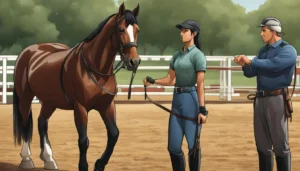
Groundwork forms the foundational basis of any successful horse training program. It is an invaluable aspect of equestrian training that involves working with a horse from the ground rather than from the saddle. This practice not only helps in establishing a solid bond between the horse and handler but also in developing the horse’s responsiveness, respect, and trust. Mastering groundwork exercises is essential for creating a well-rounded, obedient, and confident horse.
Benefits of Groundwork
Groundwork offers numerous benefits that contribute to the overall development of both horse and rider. These include:
1. Building a Strong Bond
Groundwork is instrumental in establishing a connection between the handler and the horse. Through consistent interaction and communication on the ground, mutual trust and respect are developed, which translates into a harmonious relationship.
2. Improving Communication
Engaging in groundwork exercises enhances the clarity of signals between the handler and horse. This improved communication is crucial for executing commands effectively, both on the ground and in the saddle.
3. Developing Obedience and Respect
Through groundwork, horses learn to recognize and respect human leadership. They become more responsive to commands, which establishes a foundation of obedience that is essential for more advanced training.
4. Enhancing Physical Fitness
Groundwork exercises help in improving the horse’s balance, flexibility, and coordination. It also aids in muscle development and overall physical fitness, preparing the horse for more challenging tasks.
Essential Groundwork Exercises
To achieve optimal training results, it’s crucial to master a series of groundwork exercises. Here are some of the most effective exercises:
Leading and Halting
Leading and halting exercises are fundamental to groundwork. These exercises involve teaching your horse to walk beside you at different paces, halt on command, and stand still until further instruction is given.
Exercise Instructions:
1. Begin by standing at the horse’s left shoulder, holding the lead rope.
2. Walk forward, encouraging the horse to move alongside you.
3. Use verbal cues, such as “walk” or a gentle click, to prompt movement.
4. To halt, stop walking and give a clear verbal command, such as “whoa.”
5. Reinforce the halt by gently pulling the lead rope towards your body.
6. Practice this exercise until the horse responds reliably to both leading and halting cues.
Backing Up
Backing up is a key exercise that teaches the horse to move away from pressure and enhances their understanding of personal space.
Exercise Instructions:
1. Stand facing the horse, holding the lead rope with both hands.
2. Apply gentle pressure on the lead rope while using a verbal cue, like “back.”
3. Simultaneously, use your body language by stepping towards the horse.
4. Release the pressure as soon as the horse takes a step back.
5. Practice backing up several steps, ensuring the horse remains straight.
Yielding the Hindquarters
Yielding the hindquarters is essential for teaching the horse to disengage their hind legs, which is crucial for control and safety.
Exercise Instructions:
1. Stand at the horse’s side, near the hindquarters.
2. Use a long lead rope or a dressage whip to apply pressure to the horse’s side.
3. As the horse steps its hind legs away, release the pressure.
4. Use a verbal cue, like “yield,” to reinforce the command.
5. Practice yielding in both directions for balanced development.
Desensitization
Desensitization exercises help horses become accustomed to various stimuli, reducing their likelihood of spooking.
Exercise Instructions:
1. Introduce the horse to different objects, such as tarps, flags, or plastic bags.
2. Allow the horse to investigate each object at their own pace.
3. Reward calm behavior with praise or treats.
4. Gradually increase the intensity or movement of the objects.
5. Ensure the horse remains relaxed and confident throughout the process.
Lunging
Lunging is a versatile exercise that improves the horse’s balance, rhythm, and responsiveness to voice commands.
Exercise Instructions:
1. Attach a lunge line to the horse’s halter or bridle.
2. Stand in the center of the lunge circle, holding the lunge line and whip.
3. Encourage the horse to move in a circle around you using a verbal cue, such as “walk” or “trot.”
4. Use the whip to guide the horse’s movement if necessary.
5. Practice transitions between different gaits and directions to develop responsiveness.
Advanced Groundwork Techniques
Once the basic groundwork exercises are mastered, more advanced techniques can be introduced to further enhance training.
Liberty Work
Liberty work involves interacting with the horse without any physical restraints, such as lead ropes or halters. This advanced technique emphasizes communication through body language and voice commands.
Long-Lining
Long-lining is akin to lunging but involves using two lines, allowing for more refined control and the ability to practice more advanced maneuvers.
Obstacle Courses
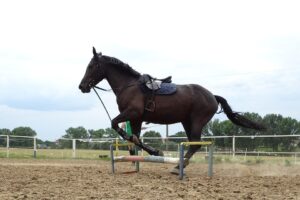
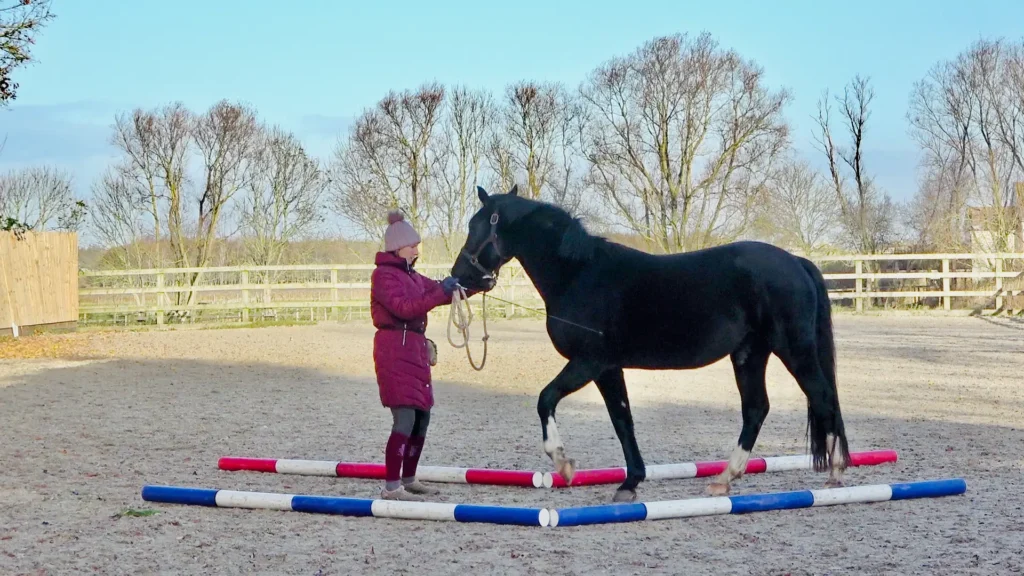
Incorporating obstacle courses into groundwork challenges the horse’s problem-solving abilities and enhances their confidence. Obstacles can include poles, cones, and tarps.
Conclusion
Mastering horse groundwork exercises is integral to any equestrian training regimen. These exercises establish a strong foundation of trust, respect, and communication between the horse and handler. By consistently practicing leading, halting, backing up, yielding, desensitization, and lunging, riders can develop a well-rounded and obedient horse. As training progresses, advanced techniques such as liberty work, long-lining, and obstacle courses can be incorporated to further enhance the horse’s abilities. Groundwork not only improves the horse’s physical and mental fitness but also strengthens the bond between horse and rider, leading to a more enjoyable and successful riding experience.