Horse riding is a discipline that requires a harmonious partnership between the rider and the horse. Achieving optimal performance necessitates a combination of skill, communication, balance, and precision. The key to enhancing these elements lies in practicing specific riding drills that focus on different aspects of riding. In this article, we’ll delve into the top horse riding drills that can significantly boost your performance and foster a deeper connection with your horse.
Warm-Up Drills
Before engaging in more intensive exercises, it is crucial to warm up both the rider and the horse. A proper warm-up increases blood flow to the muscles, enhances flexibility, and prepares the mind for focused training.
Walking and Trotting Circles
Start your session with walking circles to encourage your horse to loosen up and focus. Gradually transition into trotting circles. This drill helps improve your horse’s suppleness and balance while allowing you to practice maintaining a steady rhythm and contact.
Serpentines
Serpentines are a fantastic exercise for flexibility and responsiveness. Start at a walk and then progress to a trot, creating a series of S-shaped curves across the arena. This drill encourages bending and helps both you and your horse to master smooth transitions.
Balance and Coordination Drills
Balance is fundamental in riding, as it affects the horse’s ability to carry itself and respond to your cues. Working on coordination ensures that you and your horse move as a unified team.
Transitions Between Gaits
Practicing transitions between walk, trot, and canter not only improves your horse’s responsiveness but also enhances your ability to maintain balance and rhythm. Focus on smooth, prompt transitions that maintain the horse’s rhythm and relaxation.
Figure Eight Patterns
This classic drill involves riding a figure eight pattern, which helps improve coordination and control. Pay attention to your aids and ensure that your horse is bending correctly on each curve, which will enhance both of your abilities to stay balanced and centered.
Precision and Control Drills
Precision and control are vital for executing movements accurately and with grace. These drills will help you refine your aids and develop a more responsive horse.
Stop and Back
Practice halting your horse squarely and then backing up in a straight line. This drill focuses on control and precision, requiring you to use subtle aids to achieve a smooth stop and a balanced back-up without tension.
Pole Work
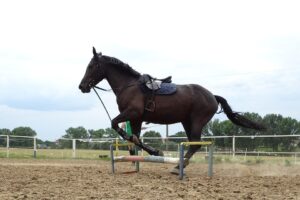
Set up a series of ground poles in a line or a grid. Riding over poles at various gaits enhances precision, rhythm, and your horse’s ability to gauge distance and adjust its stride. This drill is also excellent for improving your horse’s focus and engagement.
Advanced Drills for Experienced Riders
For those who have mastered the basics and are looking to challenge themselves further, these advanced drills will develop more complex skills and deepen the rider’s understanding of their horse’s movement.
Counter Canter
The counter canter is a more advanced exercise that requires the horse to canter on the opposite lead. This drill enhances your horse’s balance, strength, and obedience, while also honing your ability to control and support your horse through your aids.
Shoulder-In and Haunches-In
These lateral movements are essential for developing suppleness and engagement. The shoulder-in helps improve balance and coordination, while the haunches-in encourages flexibility and collection. Both exercises require precise communication and understanding between horse and rider.
Building a Routine
An effective training routine incorporates a variety of drills to address different aspects of riding. Here’s a sample routine to consider:
- Warm-Up: Begin with walking and trotting circles and serpentines to get your horse supple and focused.
- Balance and Coordination: Practice transitions between gaits and figure eights to enhance your horse’s balance and responsiveness.
- Precision and Control: Work on stop and back exercises, and incorporate pole work to improve accuracy and agility.
- Advanced Movements: If you’re ready, integrate counter canter, shoulder-in, and haunches-in to challenge both you and your horse.
Conclusion
Horse riding is an art that requires dedication, patience, and practice. By incorporating these top riding drills into your training routine, you can enhance your performance, build a stronger bond with your horse, and enjoy a more harmonious riding experience. Remember, consistency is key, so practice regularly, and always listen to your horse’s feedback to adjust your training approach accordingly. Happy riding!
#ChatGPT assisted in the creation of this article.