Horse riding is an age-old tradition that has evolved over millennia, intertwining with various cultures and societies across the globe. This noble practice has served not only as a mode of transport but has also become a significant cultural emblem intrinsic to many communities. From the daring displays of Mongolian horsemen to the elegant dressage of European equestrians, each tradition offers unique insights into the cultures they originate from. This article delves into the diverse traditions of horse riding across the world, highlighting their historical roots and cultural significance.
Europe: The Home of Equestrian Elegance
Europe has a rich and diverse history of horse riding, with traditions that have been refined over centuries. One of the most prominent is the art of dressage, which originated in the courts of Renaissance Italy and France. Dressage involves a highly skilled form of riding where horse and rider perform a series of predetermined movements known as “tests.” This discipline emphasizes precision, grace, and the harmonious partnership between horse and rider.
In Spain, the Andalusian horse is celebrated for its prowess in classical dressage. The Spanish Riding School in Vienna, Austria, is world-renowned for its Lipizzaner stallions and their ability to perform intricate movements such as the “airs above the ground,” showcasing the pinnacle of control and training.
In the United Kingdom, fox hunting has long been a tradition, rooted in the countryside lifestyle. Although controversial and subject to legal regulations, traditional fox hunts are a significant part of Britain’s equestrian heritage. Riders, dressed in their distinctive red coats, follow hounds across the picturesque landscapes of the British countryside.
The Influence of Cavalry
Many European horse riding traditions have their origins in military practices. The cavalry units of the past required rigorous training and discipline, which laid the foundation for modern equestrian sports. The French “Cadre Noir” and the Italian “Carabinieri” still maintain these traditions, showcasing the skills necessary for both ceremonial and practical military applications.
Asia: The Birthplace of Nomadic Horsemanship
Asia, particularly Central Asia, is considered the birthplace of horseback riding. Here, horses are not merely animals but are deeply integrated into the cultural and social fabric of life. In Mongolia, horse riding is a way of life, with children learning to ride almost as soon as they can walk. The annual Naadam Festival is a testament to this equestrian legacy, featuring horse racing, archery, and wrestling – the three “manly games.”
In Japan, the ancient art of Yabusame combines horseback riding with archery. Samurai warriors developed this skill to demonstrate their martial prowess and spiritual discipline. Riders dressed in traditional attire gallop down a track, using bows to shoot at targets – a spectacle that requires immense concentration and skill.
The Role of Horses in Warfare
Throughout Asia, horses have played a critical role in warfare, serving as crucial assets in the expansion and defense of empires. The Mongol Empire, under Genghis Khan, is perhaps the most famous example, where skilled horsemen utilized speed and mobility to conquer vast territories. These historical uses of horses have influenced modern equestrian practices, emphasizing endurance, speed, and strategic thinking.
The Americas: A Blend of Tradition and Innovation
In the Americas, horse riding traditions are a fusion of indigenous practices and European influences. In the United States, the cowboy culture of the West is legendary, celebrated in rodeos that showcase skills like bronco riding, calf roping, and barrel racing. These events are a nod to the skills required by cowboys in managing cattle herds across the rugged terrain.
In South America, the gaucho culture of Argentina is similar to the American cowboy but with its distinctive flair. The gauchos are skilled horsemen known for their prowess in cattle herding and their distinctive attire, including bombachas (baggy trousers) and wide-brimmed hats. The traditional Argentinean sport of “pato,” a fast-paced game played on horseback, is akin to a combination of polo and basketball.
Cultural Symbolism and Identity
In both North and South America, horses are not just working animals but also symbols of cultural identity and pride. The traditions of the American cowboy and the Argentine gaucho have become emblematic of rugged independence and a connection to the land, embodying the spirit of exploration and adventure that characterized the settling of these continents.
Africa: The Lesser-Known Traditions
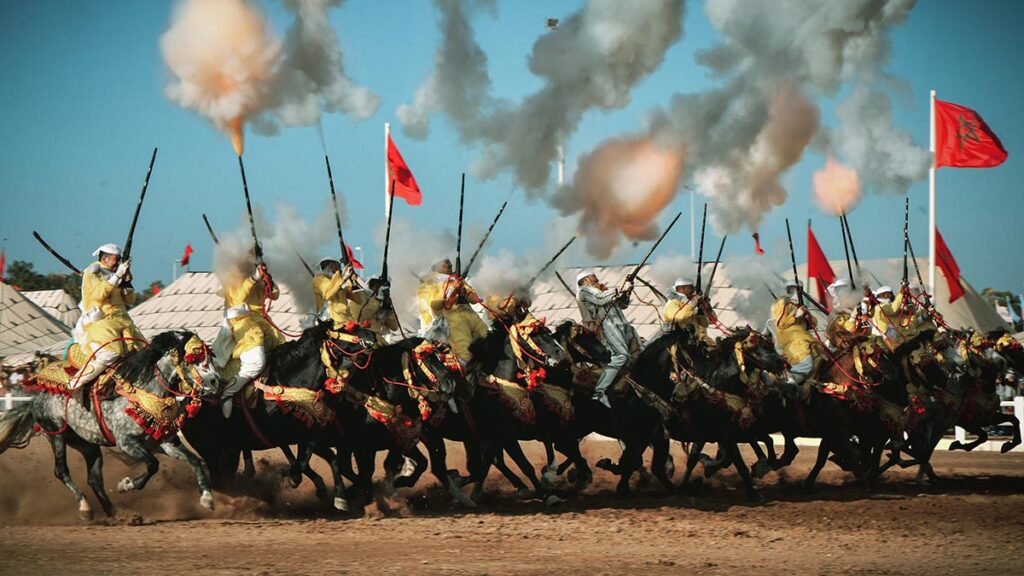
While Africa is not traditionally known for its horse riding culture, certain regions have developed unique equestrian traditions. In North Africa, the Berber and Tuareg tribes have a long history of horse riding, using horses for travel across the desert landscapes. The Fantasia, a synchronized horse riding spectacle, is a traditional performance in Morocco where riders charge in unison, firing rifles in the air, showcasing both horsemanship and cultural heritage.
In Southern Africa, the Basotho people of Lesotho are renowned for their sure-footed Basotho ponies, which are essential for navigating the mountainous terrain. Horse riding in this region is integral to daily life, with horses serving as a primary means of transport in the remote highlands.
Challenges and Preservation
The equestrian traditions in Africa face challenges such as modernization and habitat changes. However, efforts are being made to preserve these practices through cultural festivals and tourism, which also help to educate outsiders about the rich horse riding heritage of the continent.
Conclusion
Exploring global traditions in horse riding culture reveals the deep-seated bond between humans and horses that transcends geographical and cultural boundaries. From the elegance of European equestrian sports to the rugged cowboy culture of the Americas and the nomadic traditions of Asia, horses have significantly shaped human history and culture. In a world that is rapidly modernizing, preserving these traditions not only honors the past but also enriches our understanding of human ingenuity and adaptability. As we celebrate these diverse practices, it is crucial to recognize the cultural significance and continue supporting efforts to preserve these invaluable traditions for future generations.